Rate Limiting and Quota Enforcement for Agent Database Access
Agents burn through database budgets in seconds, requiring rethinking rate limits entirely.
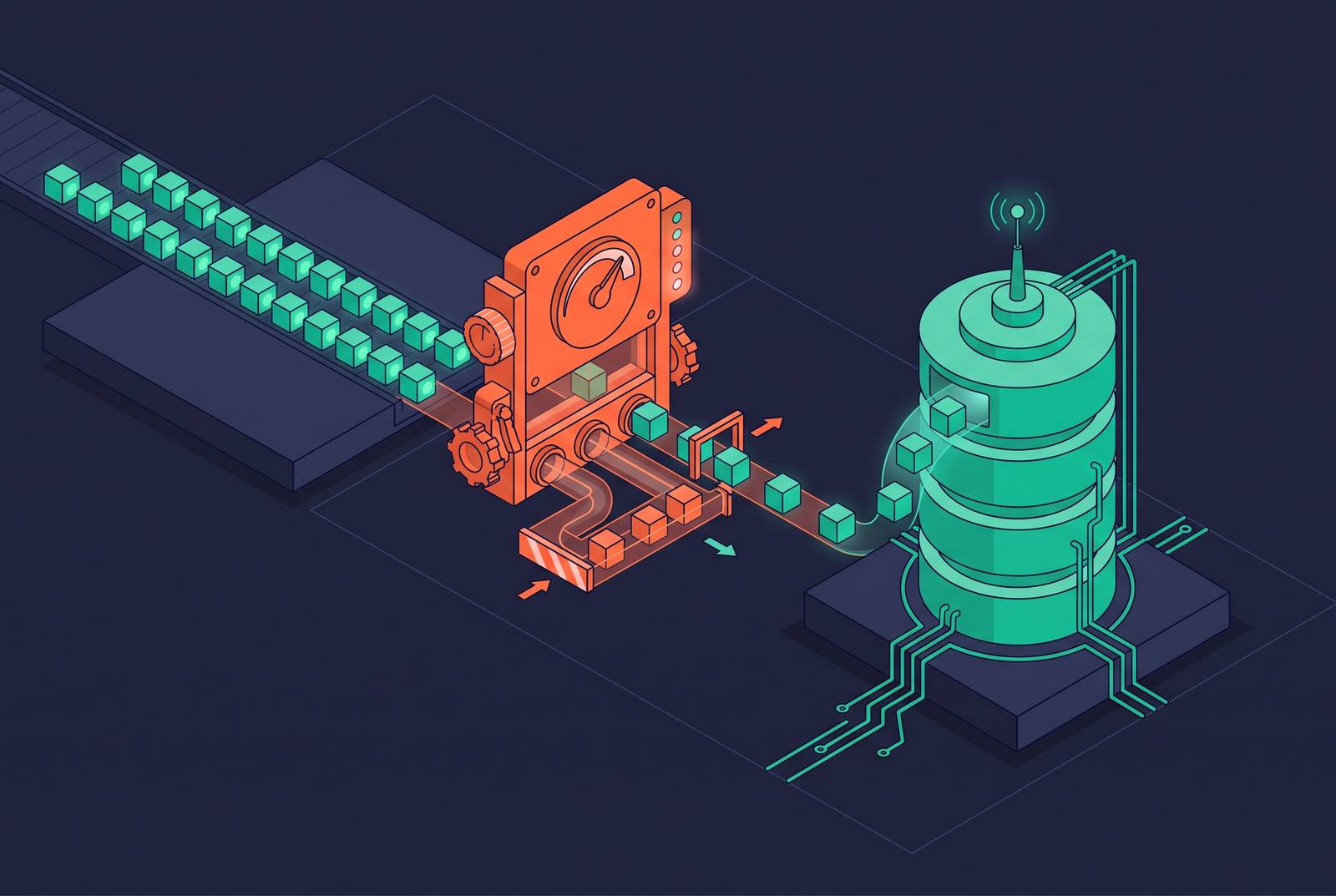
An agent can stay inside its rate limit for hours and still bring a database to its knees. That's the core failure this piece is about: the assumptions behind traditional rate limiting, built for people clicking through a browser, don't hold when the thing making the requests is an agent that never gets tired, never pauses, and never stops to wonder if it's wasting your compute.
Why the assumptions behind traditional rate limiting do not hold for agent database traffic
Picture an agent running a multi-step data validation job. It queries a table, gets back a result it didn't expect, and tries again with slightly different parameters. Then again. Then again. Every single one of those requests returns an HTTP 200. Every single one stays comfortably inside the per-minute request limit. Hours pass. The job never finishes, the database never stops working, and nothing in the monitoring dashboard ever turns red, because no individual request ever failed its check. So the runaway loop stays invisible to any rate limiter that just counts requests per minute.
Traditional API rate limiting was built for a different kind of traffic. A human sends a request, waits for the page to load, reads it, and maybe sends another request a few seconds later. That pause between actions is what gives a rate limiter room to breathe, and it's the thing agents don't have.
Agents operate at network speed. They chain queries one after another with no thinking-time in between, fan out across parallel workers to get through a task faster, and retry automatically the moment a result looks off. None of that behavior includes a pause. To a rate limiter calibrated for human cadence, a legitimate agent credential running its normal workload can look exactly like a sustained denial-of-service attack, because the traffic pattern is identical: dense, continuous, bursty.
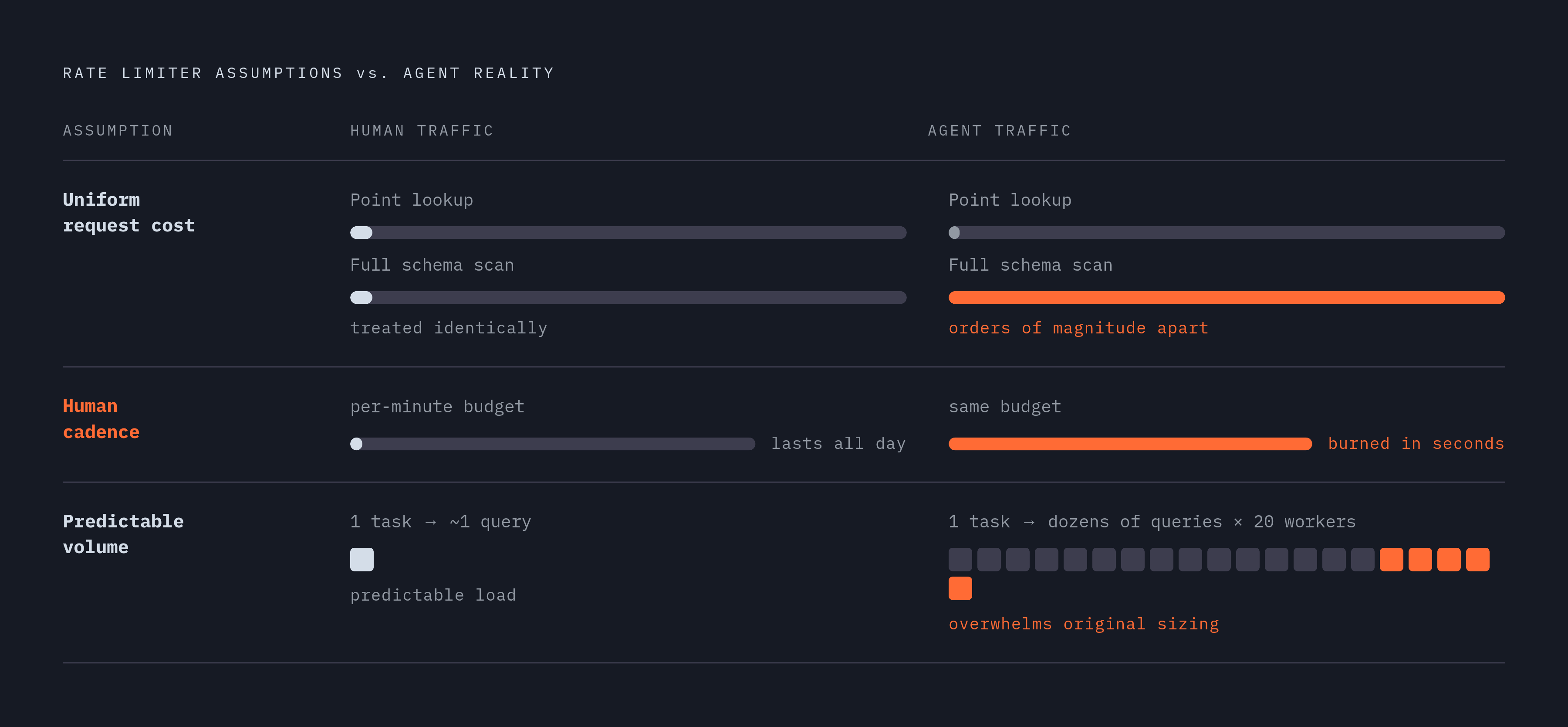
Three assumptions break at once, and they break together, which is what makes the problem structural rather than a tuning issue. The first is uniform request cost: a limiter built around counting requests assumes a broad schema-exploration query and a narrow point-lookup cost roughly the same thing, when their compute and I/O footprints can differ by orders of magnitude. The second is human cadence: fixed-window and sliding-window limits were sized around the pauses people naturally introduce, and agents introduce none, so a per-minute budget that would last a person all day can get burned through by an agent in seconds. The third is predictable volume: a single multi-step validation task can trigger dozens of sequential database queries on its own, and multiplied across twenty concurrent agent workers, the aggregate load is structurally different from anything the original limit was sized to handle.
Counting requests per minute was never designed to describe what an agent does to a database. Every fix that follows in this piece starts from that diagnosis, not from a general instinct to be cautious around AI traffic.
Counting Requests: The Wrong Unit for Database Query Cost
If cadence is the first assumption to break, the unit of measurement is the second, and it breaks even for a rate limiter smart enough to account for agent speed. If requests don't cost roughly the same thing, counting them stops working as a proxy for resource use. At the database layer, agent queries never satisfy that condition.
Think about what a single endpoint can do. A SELECT with no predicate, issued by an agent exploring a schema it hasn't seen before, can scan a table end to end and pull back every row it contains. An indexed point-lookup against the same endpoint might touch a single row. Both register as exactly one request under a count-based limiter. Both get charged the same price. The gap between the two in actual I/O, memory, and compute cost can run into orders of magnitude, a gap a limiter that only counts requests cannot see.
The LLM world already lived through this exact problem. A 50-token prompt and a 10,000-token prompt both used to count as "one request" under request-count limits, even though the cost difference between them was enormous. Token-based rate limiting emerged for LLM APIs because the industry needed a unit that tracked actual resource consumption. The database case is the same structural problem wearing different clothes. Query weight varies just as dramatically as token count, and a limiter that ignores that variance is measuring the wrong thing.
There's a perverse consequence to getting this wrong. If an agent is under a count-based limit, it has every reason to make fewer, larger queries instead of many small ones, because fewer queries leave more headroom under the limit. That can increase total database load while looking perfectly compliant on a dashboard. Enforcing the wrong unit doesn't reduce consumption. It changes agent behavior, and not necessarily for the better.
What does the right unit look like? A few mechanisms matter here, though they deserve fuller treatment later: a query weight score that accounts for estimated rows scanned, join complexity, and whether the query bypasses cache to hit storage directly; a hard result-set cap, functioning like a LIMIT clause enforced at the proxy layer, so no single tool call can pull a multi-million-row table into an agent's context window; and compute-time or CPU-second budgets tied to agent identity, tracking actual resource burn the same way token-per-minute budgets track LLM cost.
Local Rate Limits and the False Sense of Control
But if the limit lives in the wrong place, getting the unit right still isn't enough. Enforcing a rate limit locally, inside a single gateway process or inside each agent worker, limits only one copy of the infrastructure, and it scales in exactly the wrong direction as that infrastructure grows.
Consider a concrete version of this. A gateway enforces a 150-token-per-minute budget locally, inside its own process. Running two replicas of that gateway raises the effective budget for anyone routing across both to 300 tokens per minute. Adding more replicas keeps raising the real ceiling, with nobody touching the rate-limit configuration. The number on the config file never changes. The number that actually governs behavior does, and it does so silently.
The same failure appears with database connection pools. Giving each agent worker its own "polite" connection limit and query budget makes the aggregate load on the database scale with the number of workers running, not with any ceiling anyone intended to set. The database experiences the full combined burst no matter what each individual worker believes about its own restraint.
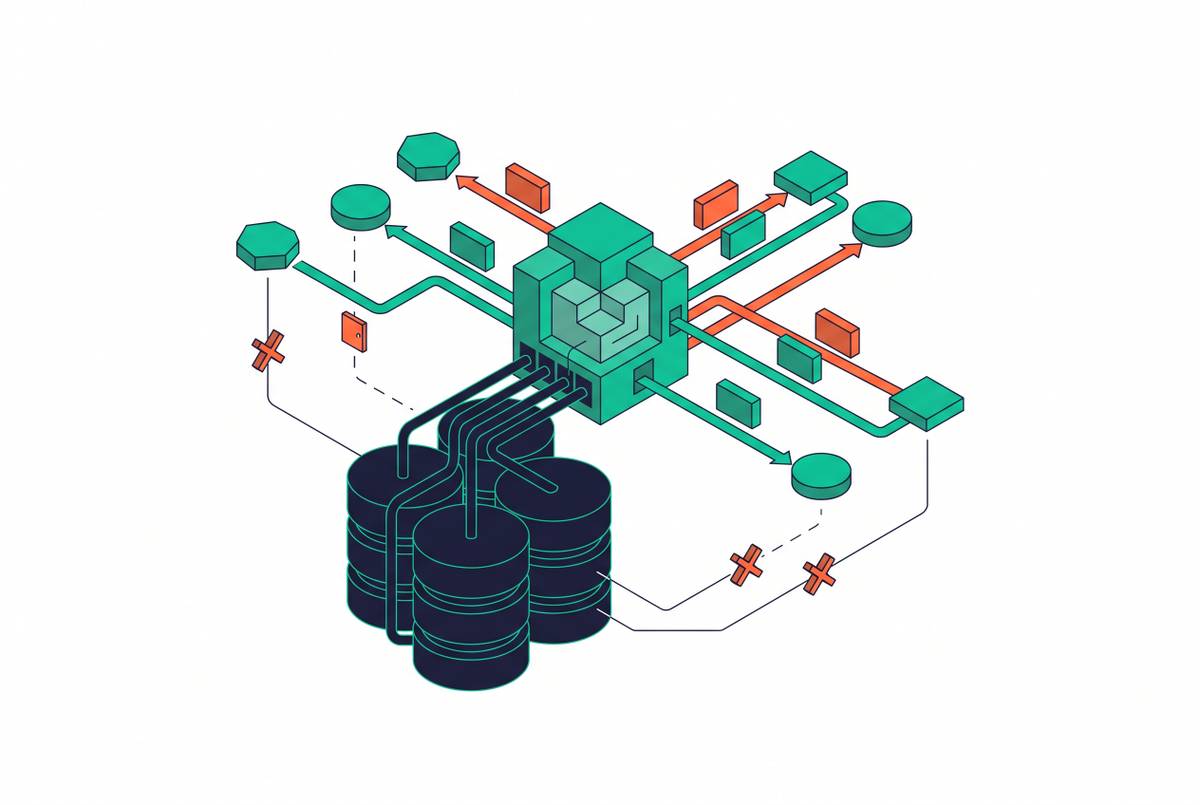
Fixing this requires shared state: a place every gateway replica and every agent worker checks before it's allowed to issue a query. A distributed bucket backed by a shared in-memory store is the standard shape of this pattern. Enforcement decisions all pass through one counter, decremented atomically, so the budget reflects reality regardless of how many replicas are running behind it. Budgets need to live in that shared rate-limit service, not scattered through agent code, so you can adjust a limit without redeploying every agent that touches the system. And in any multi-tenant setup, quota isolation between tenants has to happen at this same shared layer. If not, one noisy agent from one tenant can drain the shared budget and starve every other tenant's agents, and nobody notices until it's already happened.
Isolating burst traffic so one agent's spike cannot degrade a shared database cluster
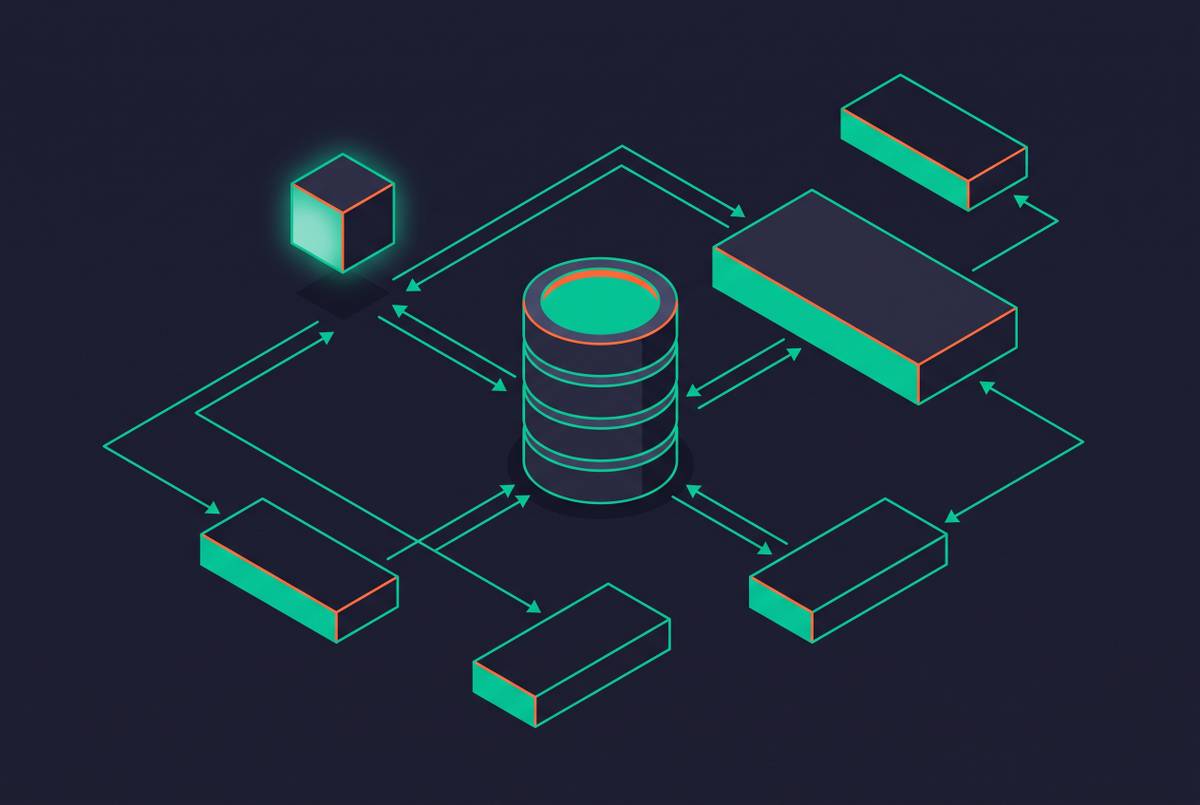
Centralized enforcement solves where the limit lives. It doesn't solve what happens to the database cluster itself. Even if a quota is enforced perfectly and correctly across every replica, an agent can still degrade shared infrastructure if its compute isn't separated from the compute everyone else depends on. A burst that's entirely within quota can still slow down query latency for every other user on the cluster, if the underlying hardware is shared.
Google Cloud's introduction of PostgreSQL for agents in AlloyDB, announced in September 2026, is the clearest sign that major infrastructure providers now treat this as a first-class problem. The architecture isolates agentic database compute completely from the primary, standby, and read replica instances, specifically so agents can run dense, unpredictable reasoning loops without degrading production performance. A hyperscaler building dedicated infrastructure for this is a strong signal: the problem is large enough, and common enough, to need a structural answer.
That structural answer has a few distinct layers. Read-only agent compute needs to run on isolated replicas or isolated compute nodes, so it can't touch write performance or primary query latency no matter how aggressive its query pattern gets within its own quota. Exploratory access, the kind of broad schema-probing an agent does when it encounters a database it hasn't worked with before, should run against a branch of the data rather than production itself, so a wide exploratory query has no path to production resources even if it somehow slips past a quota check. And connection pools need isolation per agent identity, so one agent can't exhaust the pool shared with production traffic, even through many small queries that each look harmless.
None of this replaces quota enforcement, and quota enforcement doesn't replace it either. A quota limits what an agent is allowed to consume. Isolation ensures that whatever it does consume within that quota has no way to spill over and degrade everyone else's workload. Both have to be in place at the same time.
Enforcing retry budgets and step caps separately from rate limits to catch the runaway-loop failure mode
Return to the opening scenario: an agent retrying a failing query for hours, never once tripping its rate limit. That failure mode needs its own control, because a rate limit and a retry budget are solving two different problems, and treating them as the same thing leaves a gap an agent will eventually find.
A rate limit caps volume over a window of time. A retry budget caps something else entirely: the total number of attempts allowed for a given task, or the share of total traffic that retries are permitted to consume, independent of whether any individual request has succeeded or failed. An agent can sit comfortably under its rate limit while retrying the same unproductive query indefinitely, because the rate limit was never built to notice that the agent is making zero logical progress. The retry budget is.
A few mechanisms make that budget enforceable. A per-task step cap kills a task automatically once it exceeds the number of steps a normal task of that kind should need, so the agent itself never gets to decide when it's retried enough. Exponential backoff with jitter spaces out retries with increasing delays and adds randomness on top, which keeps multiple agents from hitting the same failure condition at the same moment and all retrying in lockstep, flooding the system in a synchronized storm. And if a workflow chains multiple steps together, you need to check quota before the chain starts, not partway through. An agent that discovers midway through a ten-step workflow that it's out of quota has already wasted the work behind it and is still occupying compute it can no longer finish using.
Adaptive rate limiting adds a layer on top of fixed retry budgets: quotas that tighten automatically when error rates rise and relax again once the system runs clean for a sustained stretch. So a static limit isn't too tight during normal operation and too loose during a degraded one at the same time.
Why full query-level logging is not optional when agents are the database user
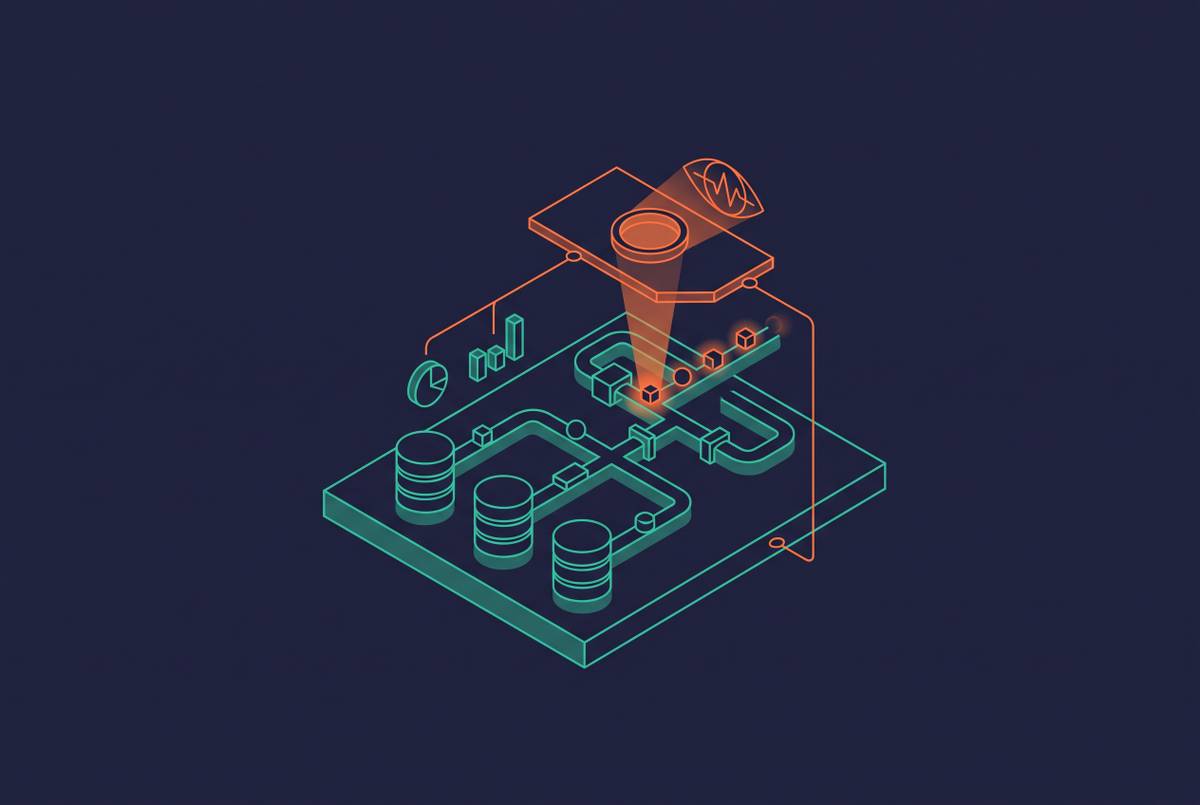
None of the mechanisms above work if nobody can see what the agent actually did. Enforcement without observability is enforcement applied blind: you can set every quota correctly and still have no way to know, after something goes wrong, what query ran, why it ran, or what it touched. Logging here is the precondition that makes the rest of the system trustworthy.
Agent query logs carry a different weight than human query logs. Human sessions are sparse enough that a missing log entry is usually recoverable from context, a person remembers roughly what they were doing. Agent episodes are dense and iterative, often exploratory by design, and a missing entry can erase the entire reasoning path that led to a data access decision. An agent with broad technical permissions can reach data it was never specifically meant to touch, and without a complete query log there's no way to tell, after the fact, whether that access was intended or accidental. Agents can also pass corrupted or stale data downstream to later steps, and they never catch the degradation themselves. A complete query log is the only record that lets someone reconstruct, afterward, whether a downstream decision was built on bad data.
Guidance the NSA and DoD published in May 2026 makes this an official expectation, not just a best practice floating around engineering teams. It establishes that MCP tool calls, including database queries issued through MCP, must be treated as potentially high-risk actions, that constraints should limit access and prevent misuse, and that tool execution should operate within strict resource and permission boundaries. Full query logging is what makes the database layer an enforcement layer that can't be routed around.
One more condition has to hold for any of this to work: logging has to be tied to a stable agent identity, not to a shared database credential. If a credential is used by multiple agents, the log it produces can't be attributed to any single agent's episode, so post-incident investigation and quota attribution both become impossible after the fact.
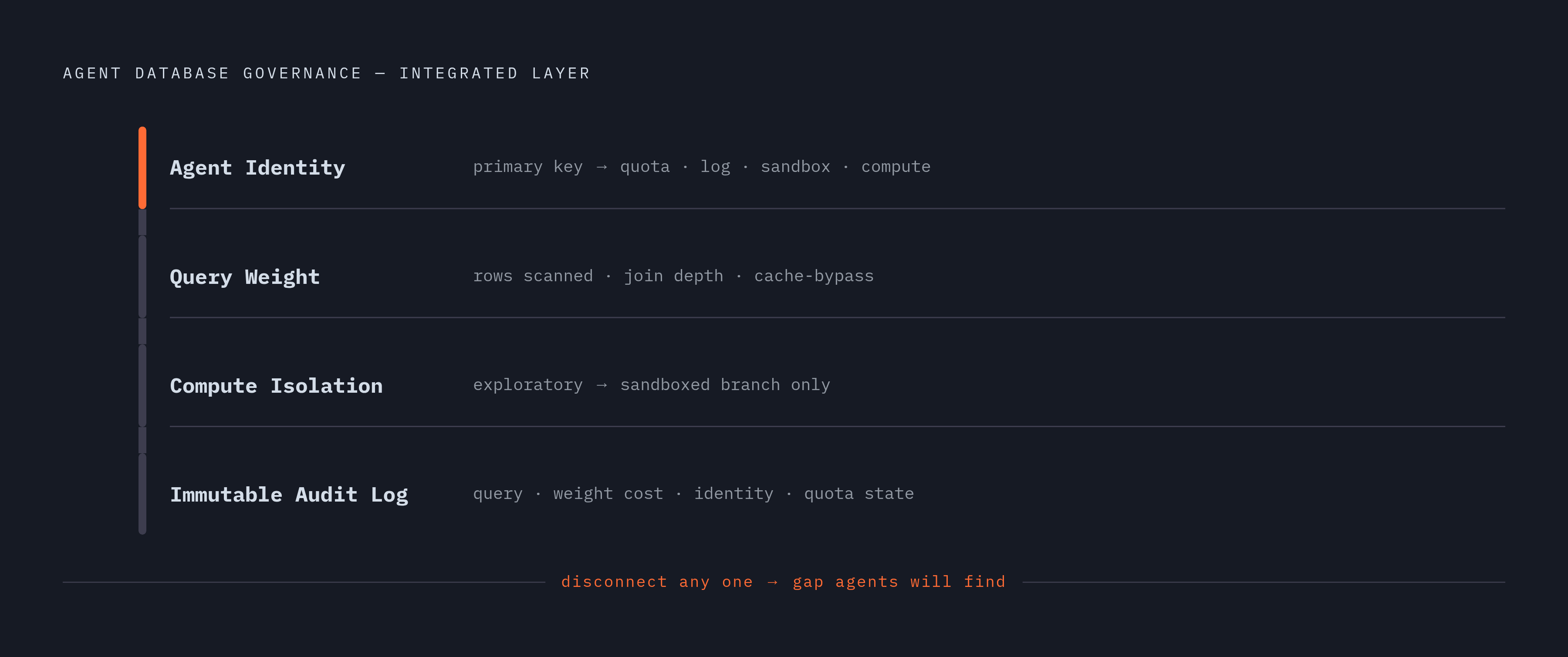
Building a governance layer that treats agent identity, query weight, isolation, and audit as one system
Every mechanism described so far, agent-aware pacing, weight-based quotas, centralized enforcement, compute isolation, retry budgets, full logging, solves a real piece of the problem. The common failure in practice is treating them as separate concerns, owned by separate teams, none of which talk to each other. Rate limiting sits with the platform team. Compute isolation sits with the database team. Logging sits with security. Agents find the gap between any two of those teams' boundaries, and they exploit it, not out of malice but simply because a gap is a path, and an agent exploring a system will eventually walk down it.
If you build a governance layer for agent database access, you need four components working as one system, not four tools working in parallel.
Agent identity has to be the primary key for everything else. Every quota, every log entry, every compute allocation, every sandbox assignment gets tied to a stable agent identity, not an IP address, not a shared credential, not a generic user account. Only identity lets limits compose correctly across a distributed deployment, and lets an audit trail point back to the agent responsible.
Query weight has to be the unit the enforcement layer checks before a query runs, not after. If you build a weight score from estimated rows scanned, join depth, and cache-bypass likelihood, a single heavy query can consume budget the same way many light queries would, closing the gap that a pure request count leaves open.
Compute has to be isolated, with exploratory queries routed to sandboxed branches. Enforcement at the quota layer and isolation at the infrastructure layer are both necessary. Neither one covers for the other.
And every query, its weight cost, the identity that issued it, and the quota state at the moment it ran all belong in an immutable log. That record makes autonomous database access accountable and makes a post-incident investigation possible.
Four components, one system. If any one of them is left disconnected from the rest, the gap between them becomes the exact place an agent, operating exactly as designed, finds its way through.